

Root Canal Treatment in Scarborough | Save Your Natural Tooth with Modern Root Canal Therapy
A tooth infection can cause pain, sensitivity, and swelling. At Dean Park Dental, we provide gentle root canal treatment in Scarborough to relieve pain, remove infection, and help save your natural tooth.
Save Your Natural Tooth
Gentle, Patient Centered Care
Trusted Emergency Root Canal Care in Scarborough
Advanced Technology for Precise Treatment

What Is a Root Canal?
A root canal is a dental procedure used to treat infection or inflammation inside a tooth. Beneath the enamel and dentin lies the pulp, which contains nerves and blood vessels. When this tissue becomes infected because of deep decay, repeated dental work, trauma, or cracks in the tooth, bacteria can spread and cause significant pain and damage.
During treatment, the infected pulp is carefully removed, the inside of the tooth is disinfected and sealed, and the tooth is restored to protect it from future problems. The goal is simple: eliminate infection while saving your natural tooth whenever possible.

Signs You May Need Root Canal Treatment
You may benefit from root canal treatment if you experience:
- Persistent toothache or throbbing pain
- Pain when chewing or biting
- Sensitivity to hot or cold that lingers
- Swollen or tender gums around one tooth
- A pimple-like bump on the gums
- Tooth discoloration after trauma
- Facial swelling associated with a dental infection
- A cracked or broken tooth exposing the inner layers
It’s worth noting that some infected teeth cause very few symptoms until the infection becomes advanced. Regular dental examinations help detect these issues early.
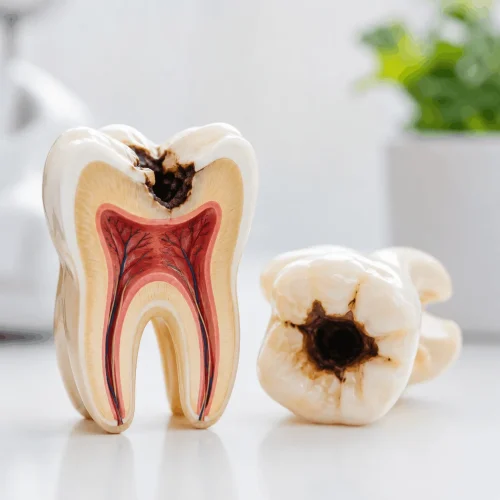
What Causes Tooth Pulp Infections?
Several conditions can allow bacteria to reach the pulp inside the tooth, including:
- Deep untreated cavities
- Large or leaking fillings
- Cracked or fractured teeth
- Dental trauma from sports or accidents
- Repeated procedures on the same tooth
- Severe tooth wear over time
Prompt treatment often prevents the infection from spreading to surrounding tissues and helps preserve the tooth.

What Happens During Root Canal Treatment?
Many patients are surprised to learn that modern root canal therapy feels similar to getting a routine filling.
Your treatment typically involves:
- Examining the tooth and taking digital X-rays.
- Numbing the area with local anesthesia.
- Creating a small opening to access the infected pulp.
- Removing bacteria and damaged tissue from the canals.
- Cleaning and disinfecting the inside of the tooth.
- Filling and sealing the canals with a biocompatible material.
- Restoring the tooth, often with a filling or crown for long-term strength.
The exact process may vary depending on the condition of your tooth and the complexity of the case.

Why Saving Your Natural Tooth Matters
Whenever possible, preserving your own tooth is often the best long-term solution.
Keeping your natural tooth may help:
- Maintain normal chewing function
- Preserve jawbone stimulation
- Prevent neighboring teeth from shifting
- Maintain your natural bite
- Avoid the need for extraction and replacement options
A successful root canal allows many patients to continue using their treated tooth comfortably for years with proper care.
Is Root Canal Treatment Painful?
One of the biggest myths in dentistry is that root canals are painful.
In reality, the infection itself is usually the source of pain. Modern anesthetics and treatment techniques are designed to keep patients comfortable throughout the procedure. Many people report feeling significant relief after the infected tissue has been removed.
If you feel anxious about dental treatment, speak with our team so we can help make your experience as relaxed as possible.

How Long Does Recovery Take After a Root Canal?
Recovery after a root canal is usually straightforward. Most patients can return to work or their normal routine the same day or the following day.
You may experience mild tenderness or sensitivity around the treated tooth for a few days, particularly when chewing. This is a normal part of the healing process and often improves with time or over-the-counter pain relief as recommended by your dentist.
If a crown has been recommended, it is important to have it placed promptly to protect the treated tooth from fracture and restore full function.
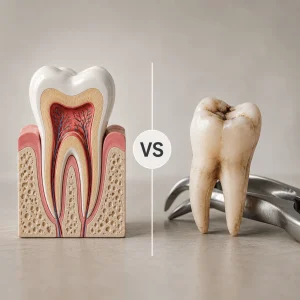
Root Canal vs. Tooth Extraction: Which Is Better?
When a tooth is severely infected, patients often wonder whether it should simply be removed.
In many cases, saving the natural tooth through root canal therapy offers important advantages. Your own tooth helps maintain your bite, supports normal chewing, and preserves jawbone health. Extraction may require additional treatments, such as a dental implant or bridge, to replace the missing tooth.
That said, every case is different. If the tooth cannot be predictably restored, your dentist will discuss alternative treatment options and help you make an informed decision.

Can Children Need Root Canal Treatment?
Yes. Although many people associate root canals with adults, children can also develop deep cavities or suffer dental injuries that affect the inner portion of a tooth.
In some cases, treatment may help preserve a baby tooth until it naturally falls out or save a permanent tooth after trauma. The recommended approach depends on your child’s age, the type of tooth involved, and the extent of the damage.
Our team carefully evaluates each young patient to recommend the most appropriate treatment.

How Much Does a Root Canal Cost in Scarborough?
The cost of root canal treatment varies depending on several factors, including:
- Which tooth requires treatment
- The complexity of the root canal system
- Whether additional restoration, such as a crown, is needed
- The severity of the infection
- Your dental insurance coverage
Molars generally have more canals and may require more complex treatment than front teeth. Following an examination and digital X-rays, our team can provide a personalized treatment plan and explain the expected costs.
Protect Your Natural Smile
An infected tooth doesn’t always have to be removed. With timely diagnosis and expert care, root canal treatment can eliminate infection, relieve discomfort, and preserve your natural tooth for years to come.
If you’re experiencing tooth pain, prolonged sensitivity, swelling, or signs of infection, the team at Dean Park Dental is here to help with personalized care and modern treatment options.

Why Choose Dean Park Dental for Root Canal Treatment in Scarborough?
At Dean Park Dental, we understand that many patients feel anxious when they hear the words “root canal.” That’s why we focus on education, comfort, and personalized care from the moment you arrive.
Patients choose our practice because we offer:
- Compassionate, patient-centred treatment
- Modern diagnostic imaging and technology
- Conservative care aimed at saving natural teeth
- Comprehensive treatment planning
- A welcoming environment for families and individuals
- Convenient care close to home in Scarborough
Our goal is not only to relieve pain but also to restore your confidence in your oral health.
Frequently Asked Questions About Root Canal Treatment in Scarborough
Is root canal treatment painful?
Modern root canal treatment is typically no more uncomfortable than receiving a dental filling. Local anesthesia helps keep the procedure comfortable, and many patients feel relief once the source of the infection is removed.
How much does a root canal cost in Scarborough?
The cost depends on the tooth involved, the complexity of treatment, and whether an additional restoration, such as a dental crown, is required. A consultation allows us to provide an accurate estimate based on your needs.
How long does root canal recovery take?
Most patients recover quickly and resume normal activities within a day. Mild tenderness when chewing may last for a few days but usually resolves as the area heals.
Can a root canal save a broken tooth?
If the tooth structure is still restorable and the damage has reached the pulp, a root canal followed by an appropriate restoration may help preserve the natural tooth. An examination is necessary to determine whether it can be saved.
Do I need a root canal or just a filling?
Small cavities are often treated with fillings. However, if decay or injury has reached the pulp inside the tooth, root canal therapy may be needed to remove infection and prevent extraction.
What happens if I delay treatment for an infected tooth?
Delaying treatment may allow the infection to worsen, potentially causing increased pain, swelling, abscess formation, bone loss, or even tooth loss. Seeking prompt care often improves the chances of saving the tooth.