

Bone Grafting in Scarborough
Rebuild Bone and Prepare for a Stronger Smile
Bone grafting restores lost jawbone, creating a strong foundation for successful dental implants. At Dean Park Dental, we provide bone grafting in Scarborough to help patients rebuild bone and prepare for long-lasting implant treatment.
Advanced Bone Grafting
Implant-Focused Care
Comfortable Experience
Experienced Dental Team
What Is Bone Grafting?
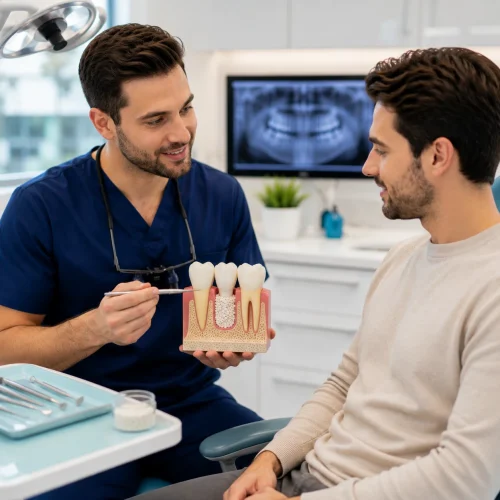
Bone grafting is a procedure used to add or regenerate bone in areas where bone volume has been lost.
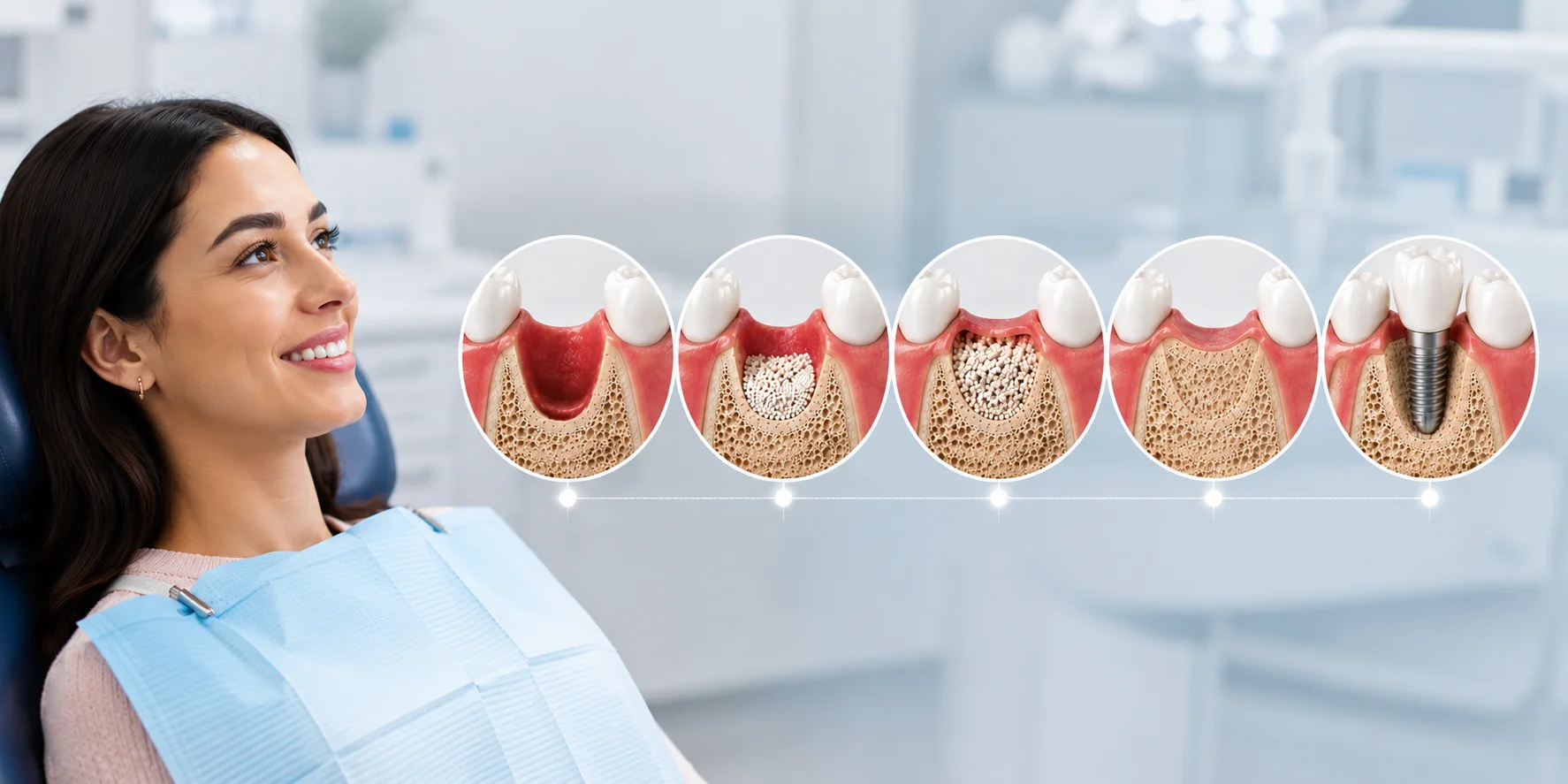
The grafting material acts as a scaffold that supports the body’s natural healing process. Over time, new bone develops around the grafted area, helping create a stronger and more stable foundation.
Bone grafting may be recommended:
- Before dental implant placement
- After tooth extraction
- To preserve jawbone structure
- To support long-term oral health
- To improve implant treatment options
Modern bone grafting techniques are highly predictable and commonly performed in implant dentistry.
Why Does Bone Loss Occur?
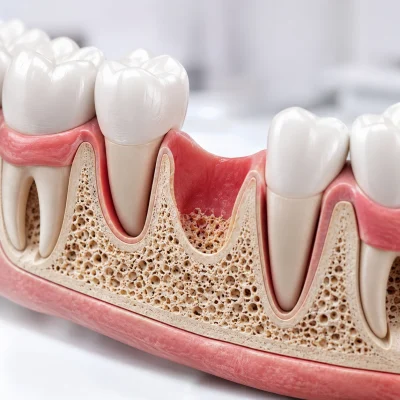
Jawbone requires stimulation from natural tooth roots to maintain its volume and strength.
When a tooth is lost, the bone in that area may gradually shrink over time.
Other causes of bone loss may include:
- Tooth extraction
- Advanced gum disease
- Dental infections
- Trauma or injury
- Long-term missing teeth
- Certain medical conditions affecting bone health
The amount of bone loss varies from person to person and can only be accurately evaluated through a professional examination and imaging.
When Is Bone Grafting Needed?
Not every patient requires bone grafting before dental implant treatment. However, it may be recommended when there is insufficient bone volume to properly support an implant.
Bone grafting is commonly considered when:
- A tooth has been missing for a long period
- Significant bone loss is visible on imaging
- Advanced gum disease has damaged the jawbone
- A tooth extraction has left a large defect
- Trauma has affected the bone structure
- Additional support is needed for long-term implant success
The only way to determine whether bone grafting is necessary is through a clinical examination and diagnostic imaging.
Why Is Bone Grafting Important Before Dental Implants?
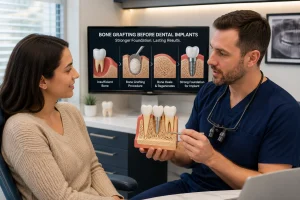
Dental implants function like artificial tooth roots and rely on surrounding bone for support and stability.
If there is not enough healthy bone available, implant placement may be difficult or less predictable. Bone grafting helps rebuild the area so the implant can be placed into a stronger foundation.
Benefits of bone grafting before implant treatment may include:
- Increased bone volume
- Improved implant stability
- Better long-term implant support
- Greater treatment options
- Improved aesthetic outcomes
In many cases, bone grafting helps patients become candidates for implant treatment when they may not otherwise qualify.
Types of Bone Grafting Procedures
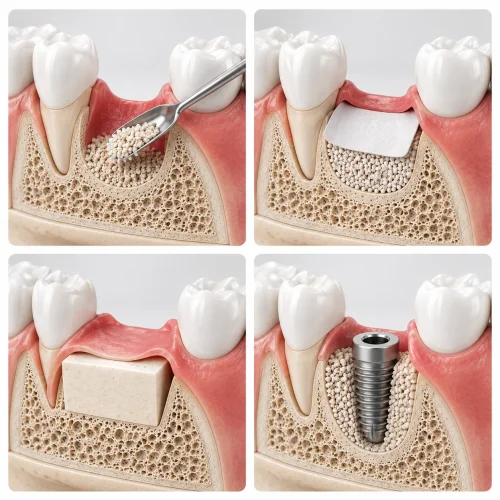
Several bone grafting techniques may be used depending on the location and extent of bone loss.
Socket Preservation
Socket preservation is performed immediately after a tooth extraction to help reduce future bone loss and maintain the shape of the jawbone.
This procedure may improve future implant placement options.
Ridge Augmentation
When significant bone loss has already occurred, ridge augmentation may be used to rebuild the width or height of the jawbone.
This technique can help create a more suitable foundation for implants and restorations.
Bone Grafting for Implant Preparation
Some patients require localized bone grafting in the area where a future implant is planned. This approach focuses specifically on developing adequate support for the implant site.
Your treatment plan will depend on your oral health, bone volume, and long-term goals.
What Is a Sinus Lift?
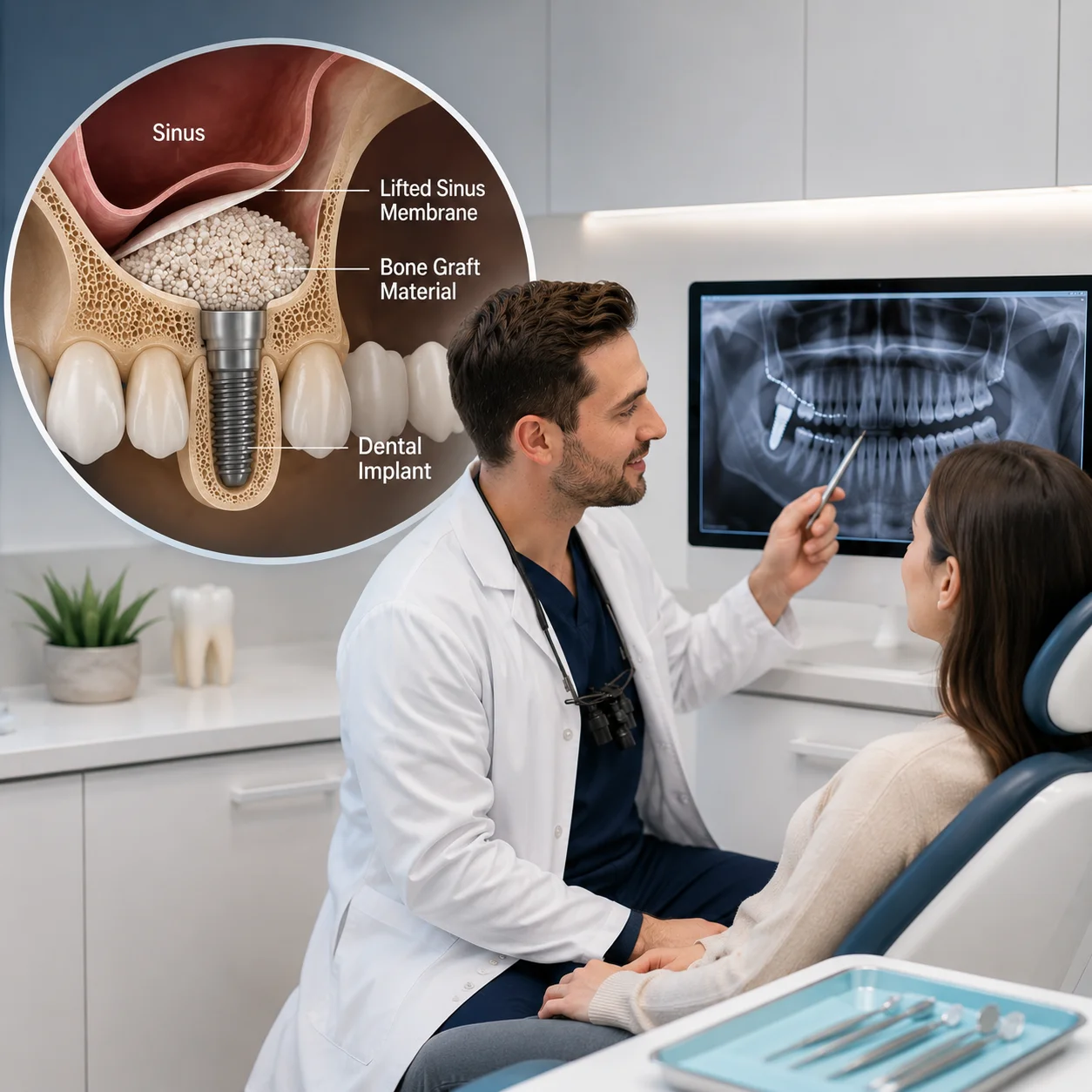
A sinus lift is a specialized bone grafting procedure sometimes recommended for the upper back jaw.
When upper molars have been missing for an extended period, the sinus cavity may expand downward while the surrounding bone gradually decreases in volume.
A sinus lift creates additional space for bone grafting beneath the sinus membrane, helping establish adequate support for future implant placement.
Sinus lift procedures are commonly performed as part of advanced implant treatment planning when necessary.
What Happens During a Bone Grafting Procedure?
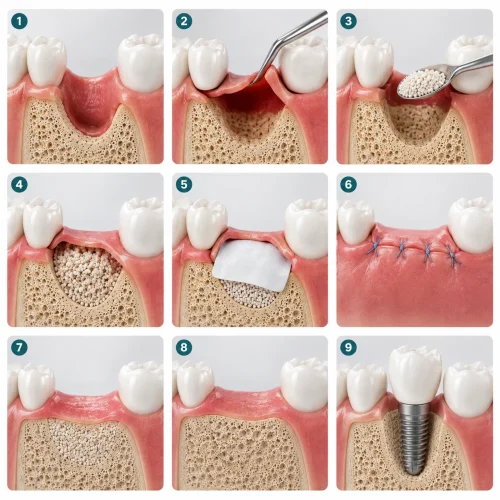
Bone grafting is carefully planned using diagnostic imaging and a personalized treatment approach.
The procedure generally involves:
- Evaluating the treatment site.
- Preparing the area for graft placement.
- Positioning the grafting material.
- Protecting the graft during healing.
- Monitoring bone development over time.
The exact technique used depends on the location and amount of bone regeneration required.
Our team will explain every step of the procedure and answer any questions before treatment begins.
Is Bone Grafting Painful?
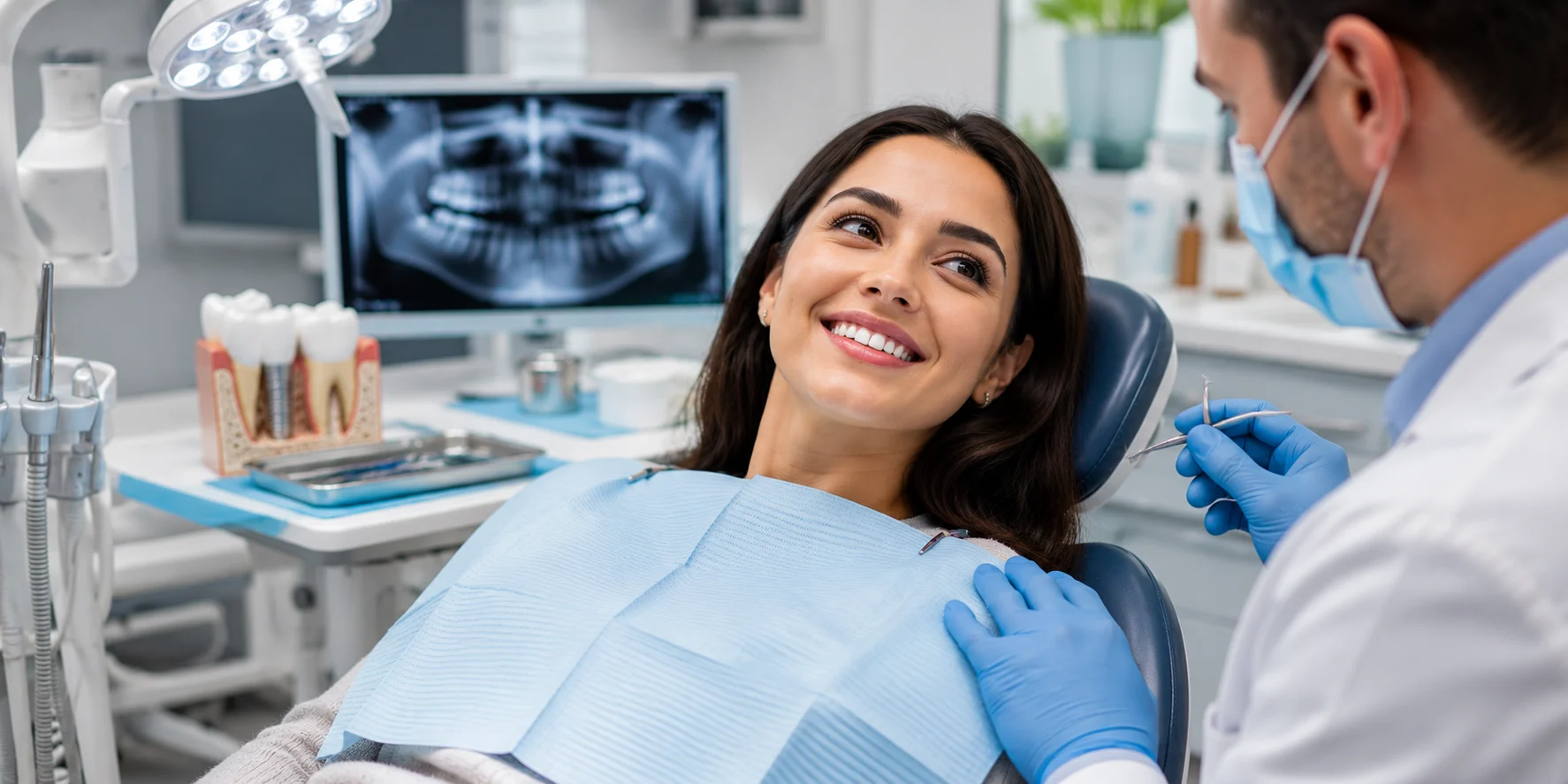
Many patients are surprised to learn that bone grafting is typically well tolerated.
The procedure is performed using local anesthesia to help keep patients comfortable. Mild swelling, tenderness, and soreness may occur during the healing period, but these symptoms are generally temporary and manageable.
Every patient’s experience is different, and our team provides detailed instructions to help support a smooth recovery.
How Long Does Bone Graft Healing Take?
Healing times vary depending on the size of the graft, the treatment location, and individual healing factors.
In many cases, the grafted area requires several months to fully integrate and develop sufficient bone before implant placement can proceed.
Factors affecting healing may include:
- Overall health
- Smoking status
- Oral hygiene habits
- The size of the graft
- The specific procedure performed
During the healing period, follow-up appointments help monitor progress and ensure proper bone development.

How Much Does Bone Grafting Cost in Scarborough?
The cost of bone grafting depends on several factors, including:
- The extent of bone loss
- The type of grafting procedure required
- The location being treated
- Whether a sinus lift is necessary
- The materials used
- Your dental insurance coverage
After a comprehensive examination and imaging assessment, we will provide a personalized treatment plan outlining all expected costs before treatment begins.
Does Insurance Cover Bone Grafting in Canada?
Insurance coverage for bone grafting varies depending on the purpose of treatment and the details of your individual policy.
Some plans may provide partial coverage when bone grafting is considered medically necessary, while others may offer limited benefits for procedures associated with implant treatment.
Our team can help review your coverage and discuss available options prior to treatment.
Why Choose Dean Park Dental for Bone Grafting?
Successful bone grafting requires careful diagnosis, treatment planning, and long-term follow-up.
Patients choose Dean Park Dental because we provide:
- Comprehensive implant evaluations
- Modern diagnostic imaging
- Personalized treatment planning
- Bone grafting solutions tailored to individual needs
- Implant-focused restorative care
- Patient-centred treatment and education
- Convenient care in Scarborough
Our goal is to help patients rebuild a strong foundation for future tooth replacement and long-term oral health.
Frequently Asked Questions About Bone Grafting in Scarborough
Why do I need bone grafting before dental implants?
Bone grafting may be recommended when there is insufficient bone volume to properly support a dental implant. Rebuilding the area can help improve implant stability and long-term success.
How much does bone grafting cost in Scarborough?
Costs vary depending on the type of grafting procedure, the extent of bone loss, and the complexity of treatment. A consultation provides the most accurate estimate.
Does insurance cover dental bone grafting in Canada?
Coverage varies by insurance provider and plan. Some procedures may qualify for partial benefits depending on medical necessity and policy details.
Is bone grafting painful?
The procedure is typically performed under local anesthesia, and most patients experience manageable discomfort during recovery.
How long does bone graft healing take?
Healing often takes several months, although timelines vary depending on the procedure and individual healing factors.
Can I get a dental implant immediately after bone grafting?
In some cases, implant placement can occur at the same time as grafting. In others, a healing period is needed before implant placement can proceed.
What is a sinus lift?
A sinus lift is a specialized grafting procedure used in the upper jaw to create sufficient bone volume for future dental implants.
Build a Strong Foundation for Your Future Smile
Bone loss doesn’t necessarily mean dental implants are no longer an option. Modern bone grafting procedures can often help rebuild the support needed for successful implant treatment and long-term oral health.
At Dean Park Dental, we provide personalized bone grafting solutions designed to help patients restore confidence in their smile and expand their tooth replacement options.